Warning

Warning: This site contains images and graphic descriptions of extreme violence and/or its effects. It's not as bad as it could be, but is meant to be shocking. Readers should be 18+ or a mature 17 or so. There is also some foul language occasionally, and potential for general upsetting of comforting conventional wisdom. Please view with discretion.
Showing posts with label Tawergha. Show all posts

Tuesday, May 15, 2012

Mainstream "Concern" Over Rebel Torture

January 28, 2012
last update, June 15, 2012


Note Feb. 19: Amnesty International has taken its concerns in a stronger and more formal direction with a report issued in mid-February. My fairly cynical post on that is here. Below is the post outlining the concerns over endemic government militia torture across "Liberated" Libya leading up to the Amnesty report.
---
As Felix alerts me, and to be lazy, the BBC reported, Jan. 26, Held Libyans 'died after torture' says Amnesty International
Several people have died after being tortured by militias in Libyan detention centres, human rights group Amnesty International has said.

It claimed to have seen patients in Tripoli, Misrata and Gheryan with open wounds to their head, limbs and back.

Meanwhile, charity Medecins Sans Frontieres has suspended operations in Misrata after treating 115 patients with torture-related wounds.

The UN says it is concerned about the conditions in which patients are held.

Conditions. Concern. Humanitarian intervention? Perhaps not, this time.

Terrible things happen in Libya, in a Beeb report. Just where the loyalist sleeper cells responsible are coming from isn't explained. Confusingly, the video report, hosted by Gabriel Gatehouse, in fact suggests the NATO/rebels government militias now in control are doing these things. How strange! Surely a last dying echo of Gaddafi's own evil, sadly imprinted on them and to be worked out with time to heal...

The guy from MSF says they quit Misrata, where the Gaddafi regime always said rebels were torturing captured loyalists. They quit, he says, because the wounds they were being asked to treat were in between torture sessions, to keep the victims from dying as the abuse continued.

The report explains the problem is not just in Misrata, but nationwide. It's a wide nation that NATO just bombed these torturers into control of, by the way, with enthusiastic support from the BBC. As always for them, the problem is "militias," which need to brought under control of the more "responsible" central government whom they formally supported. But these conniving scum bags in Tripoli take every change to reiterate that they intend as full a lockout and purge as possible of however many loyalists or former loyalists remain. This reign of terror might well be their way, not an aberration to be fixed. It might be part-and-parcel with, inspeparable from, the Western-sponsored free-market revolution in Libya's leadership. Something's got to keep the green masses down for that to work.

In fact, whose decision was it to show these victims to human rights groups, or to involve MSF, when rebel doctors or no doctors could help so much more quietly? Did they intend to make sure these examples were published, for Libyans to read about, as clearly as heads on spikes? The message: "You wanna be caught being a resistance supporter, do you? Think again..."

See Also:
Torture and lawlessness as Libya "victory high" ends
In Assabia, a different story was being told, in which residents not involved in the fighting were kidnapped and tortured, one to death, by Gharyan fighters.

"We are not Gaddafi supporters. Gharyan just want to legitimize their fight against us," said Ibrahim Mohammed, 23, who was covered head to toe in black and blue bruises which he says he got from beatings with metal chains in Gharyan. [...] his ankles were crushed in metal workshop clamps and that his finger and toe were smacked with metal bars. Blood seeped from under his fingernails during the interview.

"During my interrogations, I saw our main military commander in Gharyan lying on the floor in a pool of blood ... he was barely breathing and they had tied a metal pole to his arms and legs and were giving him electric shocks," Ibrahim said.

The body of this Assabia military commander, Ezzedine al-Ghool, was anonymously dropped at the Tripoli hospital where it was later collected by members of Assabia's city council, including Bashir al-Nwer, who says Gharyan fighters took the body to Tripoli to avoid escalating the conflict by returning the tortured body directly to Assabia.

Update Feb. 1
Thanks to Tawergha and Hurriya for this new development:
"Libya Rejects MSF torture allegations"
http://af.reuters.com/article/topNews/idAFJOE80U02A20120131
The aid agency Medecins Sans Frontieres (MSF) said last Thursday it had stopped its work in detention centres in the city of Misrata because its medical staff were being asked to patch up detainees mid-way through torture sessions so they could go back for more abuse.

Libyan Foreign Minister Ashour bin Khayyal said it was not the policy of the ruling National Transitional Council, which has promised to make a break with Gaddafi-era practices and respect human rights, to use torture.

"Gaddafi's remnants committed actions that were an aggression to the revolution and to Libya and they will now receive the treatment they deserve," Khayyal told Reuters on the sidelines of an African Union summit in Addis Ababa.
Meaning, they won't be tortured, right? He continued:
"As a government, it is not our policy at all to commit torture because we, the Libyan people, suffered under these policies and we strongly reject it," Khayyal said.

"If there was torture, then it was not with the knowledge of the government or by the agreement of the government either. It may be actions by individuals, but we have not heard about the report you mention."
They can seemingly promise justice by torture to these captives, but not "as a government." Their proxies: "individuals," militias, special units, the cosmos and Allah himself, well that might just be who's making sure, systematically, that it's happening as promised and as the demonized devils deserve. The NTC does oppose torture of these human scum, and if they hear about it, they'll put an end to it. They haven't ever heard about it yet, despite the rest of the world hearing about it. They try their hardest, but find it very hard, perhaps, to hear certain things clearly these days...

Sounds fair enough, right?

Then, a response more from the Misrata militia front line - they deserve worse than they're getting. Men captured in Sirte and elsewhere by Misrata fighters are gathered in a small jail journalists were taken to. Mansour Daw, onetime chief of Internal Security is there, captured with Gaddafi on Oct. 20. He's had no lawyer, no news, no family contact, illegally. But no outward sign or complaint of torture. “The living conditions here are not bad, given the crimes these men have committed," one jailer told the AFP.

One prisoner is a soldier of the Khamis Brigade, Ibrahim Sadeq Khalifa, captured in Tripoli. He has the same problems of isolation (it seems to be standard there), plus beatings he speaks of:
He was transferred on Sept. 5 to the Misrata prison after spending about two weeks with the ex-rebels, who he said beat him repeatedly.

Although there were no glaring signs of torture, a scar was visible near his collar bone.

“It is from a cigarette burn. The thuwar (anti-Qaddafi revolutionaries) did that,” he said when probed by AFP, speaking hesitatingly as jailor Ibrahim Beatelmal approached.
None of that happened in the Misrata prison, he implied, or had anything to do with his candid "confession" there to AFP that he took part in yet another version of the "Khamis Brigade shed massacre," claiming to have burned the captives alive, in contradiction to nearly all other accounts and common sense - how does a fire started Aug. 23 - or even Aug. 22 as Khalifa wrongly states - continue smoldering right through the 28th?

Poor Khalifa's account and its problems are covered here, alongside another "confessed" killer in the same crime. Like the rest,these witnesses conflict with each other and with the rest, and with some more wholesome clues of the physical and temporal sorts, suggesting the rebels piled their own victims here and charred them blank before dozens of different stories somehow latched onto them.

But the "mass murder's" bizarre, apparently coerced story, plus lack of visible torture clues (aside from a cigarette burn), was presented by as the strongest case that there was no torture in Misrata at all. To illustrate this, in fact, seems to have been the main purpose of the exercise.
“If we wanted to torture these prisoners, Khalifa is the best candidate for that. He has burnt alive 150 men,” [guard Ibrahim] Beatelmal said, as he smoked a cigarette.

“When he came to our prison he weighed 65 kilos. Now he is more than 80 kilos. That would not happen if you are tortured. I am angry at these human rights people. I don’t even want to see their faces.”
And if he does, he might have to start cutting those faces. His name almost says in English "Beat 'em all." How appropriate.

This devil confessed to something that was supremely evil, but that quite possibly never happened. Confessions are of things that are true, so we should refrain from calling this one. It's only a claim, another in a long line. People credit stories like this because they think "why confess to/claim something with the death penalty unless it's the truth? What lie is worth dying for?" Two options could explain it:
1) A deferred-sentence plea deal, life sentence or even early release instead of death in trade ... for what? The simple truth?
2) Death is the nice option, and it was made clear by his torturers that the choice was his to make.

Feb. 3: Thanks to Petri for the tip - Human Rights Watch has it documented and is calling for action: Libya: Diplomat Dies in Militia Custody
He used to be a diplomat in France. In late January he was summoned by the local authorities (Zintan brigades?), questioned about his loyalty, arrested, then dropped off dead in a Zintan hospital next morning. His body showed signs of pretty egregious torture - toenails were pulled off, for one.

Now what amazing stories did he come up with before his demise? Something that might blow the socks off Khalifa's story?

Also, an older report from September I just noticed:
Christian Science Monitor, Sept. 13
"Whatever is happening between the [former] government forces and the rebels, there are lots of people who are sabotaging and misusing the situation, and are taking advantage for revenge on each other," says a family member of non-Libyan man whose injuries at the hands of anti-Qaddafi forces have shocked the family and friends.

The man, who had worked for a former regime member who has since fled Libya, was handed over to pro-NTC fighters at a checkpoint. Relatives told the Monitor that he was subjected, for several hours, to electric shocks, severe beating, and threats that he would be killed if he did not confess to having weapons and his body would be thrown into the Mediterranean Sea where it would "never be found."

The man was eventually saved when a rebel intervened and vouched for him. The suspected Qaddafi supporter received apologies from the local officer. "They think that just because they have a gun, or they have contacts, they can have anyone picked up and torture them," says this family member.

And as long as they can torture the person into "admitting" he has a weapon, then all the torture is justified by his armed action against the new government. He can be punished for all the loyalist crimes that happened or that rebels say happened.

All isolated incidents! Bad apples, here and there, a lot of them. But there are some good apples too! They just don't get invited to the torture sessions...

Update Feb. 12:
An unusually critical piece from the UK Daily Mail reads almost like something targeted against the old government, except much better supported with facts. It covers MSF's allegations in a bit more details, and adds more on Amnesty's efforts, which seem sincere enough.
Amnesty International has documented thousands of cases of abuse and torture, and handed photographs to The Mail on Sunday. Senior crisis response adviser Donatella Rovera has protested to the National Transitional Council (NTC) without success.
‘I have seen people who have been beaten with iron bars and rubber pipes, some hardly able to walk,’ she said.

‘Men are hung by handcuffs from a door frame and attacked with electric wires. Tasers are applied to their ears and genitals, and finger and toenails are torn out.’
She has evidence of 12 deaths. No investigations have been carried out by the authorities. There is not a single case where anyone has been brought to justice,’ she said. ‘There is a total lack of accountability.’
Of course there have been no investigations. They have to hear about something first, then be able to do anything about it next. If they can't do one, why bother with the other? Besides, the Misrotten rebels say it's they who are worried about a lack of accountability for crimes they suffered.
Commander Mohamed al-Deaka is a former construction engineer. He was defensive about abuse by his men. ‘Yes it happens here, but it’s everywhere in Libya,’ he said.
‘We have to use force to make prisoners give answers. Our city [Misrata] was destroyed in the fighting. Now we want to know who carried out the destruction, who raped our women and stole our property."
The rape part in particular - they find no admissions odd, since they know it happened. This in turn is due in large part to the famous "confession" of two Tawerghan teenagers, later found to be unreliable enough Amnesty called them out on it. That the rest aren't in agreement with that inconsistent batch of coerced nonsense is clearly frustrating, and the resort to torture to force confirmation totally understandable. (??!!)

Mainly the Mail article speaks of a video, posted three months ago by site contributor Tawergha. It shows a man from Tawergha (the town closed down by Misrata rebels) being tortured. It has information to go with it here, and screen grabs, courtesy of the directior of the "al-Fellah ‘internally displaced persons’ (IDP) camp in a suburb of Tripoli." Here, Misrata brigades arrested a former shopkeeper named Saleh Barhoun Gersh, who had dressed in women's clothes as a disguise, it's said. He's injured and bleeding, shown being whipped and electrocuted with wires. His tormentors say, as translated:
‘You are from Towerga, you dog. You say you did nothing in Misrata, so why are you in disguise? We found weapons in every house in Towerga. Your hand is bleeding and we hope it is paralysed.’

The men chant as they reach for live electric wires: ‘Everyone we catch is innocent, they say. ‘Well, blood will come from your eyes and nose until you admit what you have done. We’ve caught 60 of you so far and none of you did anything.’
And they know that can't be true. How about all the weapons? It's not like they were threatened with an attack or anything to defend themselves against. These could only be for killing and raping in Misrata. Sadly, the article adds "It is not clear when the footage was taken or what happened to Mr Gersh." This suggests he never returned. He's either dead or in captivity with no acknowledgment, which is never good. Perhaps they got confirmation, finally, that those kids were right, and finally have a better reason yet to be sure all the other Tawerghans they harass, rape, arrest, torture, and kill will have deserved it. Updates May 19:
NTC Prisons as the Answer


http://www.chicagotribune.com/news/sns-rt-us-libya-unbre8491lk-20120510,0,2026959.story
since pulled. Alternate source: 
http://af.reuters.com/article/libyaNews/idAFL1E8GAM1D20120510

UNITED NATIONS (Reuters) - Several prisoners likely were tortured to death at a detention center in Libya under government control, the United Nations said on Thursday as it urged the country to make stamping out such practices a top priority. Libya's Justice Ministry has control of 31 detention centers with some 3,000 detainees, but about 4,000 prisoners are still in the custody of Libyan revolutionary brigades, U.N. special envoy for Libya Ian Martin told the U.N. Security Council. Of the detention centers under government authority, Martin said "control over these facilities is often shared with other parties, including the brigades that had been running them."

 The U.N. human rights agency and aid groups have accused the brigades of torturing detainees, many of whom are sub-Saharan Africans suspected of fighting for the toppled government of Muammar Gaddafi during Libya's nine-month civil war.

 "Mistreatment and torture of detainees continue," Martin said. "UNSMIL (the U.N. Mission in Libya) expressed deep concern regarding the deaths of three individuals at a detention center in Misrata ... under the authority of the Ministry of Interior."

 "The deaths all occurred on April 13 and we have credible information that they were a direct result of torture, as well as information that at least seven other persons were tortured at the same facility," he said. ... Martin said allegations of torture had also been made at detention facilities elsewhere in Libya, including Tripoli, Zawiya and Zintan.

"Things They Don't Even Do In Israel"

Horrible stuff was reported by this Sirte native taken to Misrata after losing an arm and a leg in battle. The usual beatings and torture widely reported plus widespread rape (of male prisoners), cooking people alive, slicing people up, castrating, targeting loyalist officers and people named Muammar. This guy's story is extreme, but it also rings true in the delivery. There's enough info value it's worth its own post for further discussion/development. That's here.

Confronted with such tales of barbarity, a skeptic might argue this is all fabricated, some desparate pro-Gaddafi propaganda to get the world community to help turn back the "progress" made by the revolution. But the relevant elites will never play that game, even if it isn't a game. Green resistance should save it's breath for waterboarding if they're making things up. No one under the control structure is able to help them at all. A few do-gooders at the orgs who might care enough, kept well at arm-length by overwhelming militia force. In the space created, a medieval purge of body and mind is unfolding, as the West tacitly allows the rapid corrective surgery it knew would be required. The idea was always, with a few sanctions, some light bombing, etc., to bring reality in line with the fantasy of an "Arab Spring" groundswell there, to help "the Libyan people" realize their universal desire for change. It's those who chose to defy that tightly-scripted narrative that have been the problem, of whatever size, and the problem would have to be erased sooner or later. And we're hearing from ostensible direct witnesses to that erasure. And through them, we might have the true flavor of this second and longer phase of "the people's" movement for "liberation."

Audio and transcript here:
http://libyanfreepress.wordpress.com/2012/05/14/shocking-interview-with-a-man-who-has-been-tortured-for-months-in-misuratas-jails-3-video/

June15: More extreme torture I missed before (thanks, Hurriya)
An AP story of March, since pulled from almost all sources; One Chinese page that still has it:
http://www.tianya.cn/publicforum/content/worldlook/1/443940.shtml
An excerpt:
At a Misrata garage that has been turned by militiamen into a makeshift prison, one detainee, Abdel-Qader Abdel-Nabi, shows what remains of his left hand: The fingers have been cut off in a ragged line about halfway down. Abdel-Nabi said militiamen lashed his hand with a horse whip until the fingers were severed.
  "Then they threw me bleeding down the stairs," he said. His interrogators were trying to get him to confess to working with Gadhafi’s forces during last year’s civil war and collaborating in the killing of rebel fighters.   
Around 800 other detainees are held in the same facility, which militiamen allowed The Associated Press to visit. The detainees are accused of involvement in killings, torture, rape and other crimes under Gadhafi. There are no courts at the moment capable of addressing the suspicions, so the detainees are entirely at the mercy of militiamen.   
Medics in a clinic set up in the garage said they have treated dozens tortured in interrogations. One medic said he had seen nine prisoners whose genitalia had been cut off, and others given electric shocks. He spoke on condition of anonymity because he feared retaliation by the militiamen.
As for Hr. Abdel-Nabi did not speak anonymously. Has he suffered further retaliation? Is he dead? Missing half his right hand now too?

Thursday, April 19, 2012

The Fall and Purge of Tawergha

September 18. 2011
last edits April 23, 2012

The City
Photo: David Enders,/MCT
Tawergha (Arabic: تاورغاء)‎ lies about 30-40 miles south of Misrata/Misurata, along the western coast of the Gulf of Sirte. Its population is unclear (10,000 is reported, 30,000 cited more commonly) and recently changed (to zero?). From the Wikipedia entry (which uses a different and common spelling - "Taworgha" - and the Arabic cited), it's a town that's occupied by an unstated number of people of unknown type. [1] A Euronews dispatch filming a clash there in May called it a "no man's land" between rebel and loyalist areas. [2] 

Wiki says its name means "the green island" in Berber." [1] But another source, the rebel outreach site Free Misurata says rather "the name of Taworgha was used by Misrataies to describe the black population in that area, because of the dark skin they have just like the real ancient Tuareg." [3] Indeed, it's inhabited mostly by black-skinned people originally from further south, apparently a remnant of the slave trade, a significant factor considering known anti-black sentiments in the rebel camp. As they explain:
The origin of this black population in North Africa gos back to the roman empire days , when the slavery trade was a good businesses by bringing the blacks from meddle Africa to export them from Misratah port ( was known as Kayvalai Bromentoriom )* to old Rome.

The sick who can not make it to the port and the long trip by ship was left behind at that spot, which is known for its swamps and jungles ( Libya was called the “Bread Basket of Europe”, because of the moderate climate and fertility of soil during the Roman time, and was one of the main exporters of grains to Rome ) [3]
Otherwise, the Wikipedia entry desribed Tawergha as "a city in Libya that followed the public administrative jurisdiction of the city of Misrata [...] during the rule of Muammar Gaddafi." It also noted that "control of Taworgha helped the Romans coordinate control of Libya." [1] By this, Tawergha is strategically important, and that's basically part of Misrata/Misurata anyway, fit to be done with as the people in charge there like.

Misrata - the nation's third largest city and a major regional port - had been under at least partial rebel control since February. But loyalist elements hung on in and around the city, putting it famously under a state of deadly prolonged siege. Some of this came from the black "Taureg" town that also served as a "green island" of government support.

The Preludes / Priming the Hate Machine
Now, there is a danger in examining this of placing too much emphasis on race. The tactical threat alone is cited, and does seem compelling. But racism emerges, time and again, in unsettlingly blatant ways. Free Misurata explains the back-story of how the black Tawerghans became a wicked race (again, [sic] implied throughout. It's perfectly readable):
... Gaddfi started to give them power by using them as personal body guards and brain wash them so they over estimated them selves ,their resources and abilities. [...] because Gaddafi just used them and never improved their live style, there was always some kind of jealousy when they compare them selves to prospers Misratah. [3]
Patronizing suspected jealousy is nothing new for lynch mob types. As Misratan rebels see it, this envy, the regime brainwashing, and whatever other factors led to a fall from grace by their neighbors. This was testified to repeated rocket attacks from their hamlet, occasional raids into the city with their black troops featured, sometimes re-taking portions of Misrata in bloody battles. This is to be expected as the government tried to restore order, but as it was remembered anyway, the Tawerghans' actions stepped far beyond the norm. Again, Free Misurata:
When Gaddafi asked them to attack Misratah……they did what evil is ashamed to do. [...] When Gaddafi forces entered Misratah from the eastern part with the help of residents of Taworgha , whom are of a black descent, they made what evil is ashamed to do, killing, loathing, rape, and destroying the homes by bulldozers.

After they entered the eastern part of Misratah they have forced the families to flee eastward but not to westward, because they want to use them as a human shield.

”Taworgha stabbed Misratah in the back”
It might seem understandable to many - you can't leave crimes like that unanswered. The systematic mass rape aspect in particular is frequently called on, supported by various evidence like alleged cell phone footgae seized from Gaddafi troops. But the only evidence shared with the outside world was the clearly coerced verification of two young captives taken, apparently, on one of their raids on Tawergha.

It was in late May this was broadcast by the BBC, from prisoners still wearing "the same filthy, bloodstained army fatigues they were captured in two weeks ago." [4] Amnesty international's team spoke with both of these kids and found their stories inconsistent and unreliable, so probably coached by their captors. [5] Going out of one's way to create a myth that will enrage the fighters in advance and encourage war crimes, if that's what happened here, is highly unethical to say the least.

The Misratans also suspected the invaders from the south had help from within their walls, and their revenge started close to home. A neighborhood was purged, as the Wall Street Journal reported
Before the siege, nearly four-fifths of residents of Misrata's Ghoushi neighborhood were Tawergha natives. Now they are gone or in hiding, fearing revenge attacks by Misratans, amid reports of bounties for their capture. [6]
In early-to-mid-May, they started making public vows against Tawergha itself. Sam Dagher reported for the Wall Street Journal, in a now-famous and rare article, how regional rebel Commander Ibrahim al-Halbous eerily said that "Tawergha no longer exists. There is only Misrata," while encouraging the residents who oppose them to all leave. With less authority but greater menace Dagher noted some rebel graffiti left out on the road to Tawergha - "brigade for purging slaves, black skin." [6]

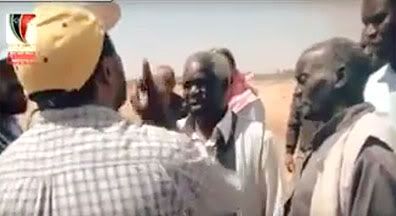
A mid-May discussion between rebel fighters and tribal elders was filmed in the desert, posted later by VSMRK. Elderly black men in traditional garb listened with worry and muted disgust as young Arab thugs in baseball caps explained things [in Arabic of course, so I can't follow], with hand gestures of leveling and totality indicating that Halbus' prescription was for real. At the end, an ominous dust storm blew in and the video stopped. [7]

Would they help the people "liberate themselves," or purge the whole town? A bad sign was the NATO bombings of reported Gaddafi sites around Tawergha in the following weeks, likely phoned in by Misrata rebels. In late June one strike at least killed many civilians in the usual unconfirmed way. According to some reports, sixteen were killed, including a whole family, when a NATO bomb hit the public market. Video shared there shows at least one baby was among the dead. [8]

But still the question of the town's continued life was allowed to hover through July and beyond, as Misrata both absorbed and dished out more attacks.

The Battle
Wikipedia cites a start to the Battle of Tawergha on August 11, and end on the 13th, which seems accurate enough by what else I've seen. No mention is made of forced expulsions or other human rights abuses, but that's just a serious but widely-repeated omission. [9]  In a video dispatch for al Jazeera English, Andrew Simmons speaks with the commander on site, Ali Ahmed al Sheh. The townspeople were used by government forces as "human shields," says al Sheh. This at first limited their fighting ability, leaving them only able to use rifles against tanks until all the people were cleared. [10] 

However, a rebel video of August 11 goes against this. It shows Freedom Fighters using artillery and truck-mounted anti-aircraft guns and firing long-range rockets from the start. It also shows them in city center, and it seems pretty empty already. There are no cars but for one that's looted, and no sign of non-rebel life for several minutes.

Allahu Akbar is repeated approximately 14,000 times before a shocking segment of a Gaddafi loyalist is shown. Amidst a battle with holdouts on the outskirts, one is taken. He's apparently military, his head badly burnt, forehead charred and peeling, caked in blood, hair melted, ear lacerated. His comrades are probably dead, and he must be in great pain or great shock, but is standing and alert. He seems to have been a light-skinned black man to begin with, but he is now mostly charcoal black, and the rebels are shouting and laughing and jabbing him threteningly with their fingers, rather than getting him medical help. [11]

There is an August 13 report for BBC News by Orla Guerrin on the threats posed to Misrata, leaving them "numbed by loss and trauma." [12] The report made no mention of fight they were then waging, in the numbed state, to take Tawergha, and no mention of Tawergha at all. Yet the same day, she was there reporting on the battle just then wrapping up, in a video report that made no mention of the purge, or inhabitants, at all. Rebel fighter Khalid Bashir said he would sleep easier, with his children safer, after the battle won here and the threat somehow eliminated.  Former government positions shown, "abandoned at speed," she said. "They ran in a hurry," she said, after having "dug in here for a long stay." [13]

She mentioned continued fighting against "pockets" of Gaddafi fighters in the city, but made no mention of non-combatant inhabitants, as if the town were an empty stage to fight battles in. As Human Rights Investigations put it, Guerin's reporting, "disgracefully, failed to give the ethnic cleansing context." She made this omission "despite actually interviewing Ibrahim al-Halbous," the commander who had first prophesized what was then happening under this reporter's nose. [14]

The Purge Realized
Cover stories and denial often being evidence of a crime, it's interesting that a fighter named Fatateh told the Telegraph they didn't have to remove anyone, and also gave them an earlier date. "Some [homes] had been taken over by pro-Gaddafi militias after the civilians had fled," he told them, "and a two-day battle had ensued with rebel forces on the 10th and 11th of August." [15]

Andrew Simmons, reporting for Al Jazeera English on the 12th, gave us one of the only visual glimpses we've been allowed of even the edges of the promised purge. Simmons said the rebels "took this town by storm in what appears to be a highly co-ordinated operation with NATO," and were now generally relocating the people. One black man in traditional clothing, his left leg splattered with blood, is carried gently - through leering crowd - to somewhere else. It'ssaid he "engaged them in combat." I would, and he may have. [10]

The rabbles were on nice behavior on account of the camera; nothing morbid or terrible was shown, just the rather ambiguous liberation of another Libyan city. It comes across as slightly troubling, but not as horrific as it might have been. As Simmons described his view, at the tail end:
"They search from house to house, the flags of Gaddafi's Libya on every one. None of his men are left here, only this woman, an Egyptian, terrified. "You're safe," the fighters say. "No one will touch you." "I'm afraid, she tells them. Leave me in my house." She explains that she has nine children under 12, and they ran away during the attack.
The opposition says civilians are being evacuated, and handed over to the red cross." [10]
She's not allowed to stay at home, and leaves with them for Misrata, hoping to find her many children there (her story is presented as fishy). Mr. Simmons' follow-up tweet confirms it with a nice spin, and clarifying that Red Cross is really the Red Crescent, and giving a rare quantification of "hundreds"of victims:
Hundreds of civilians evacuated from Tawergha to Misrata away from Gaddafi thugs. Red crescent helping them now #libya via @simmjazeera [16]
But it was al Jazeera's camera that captured rebels trying, with visible worry, to prevent the filming of a locked freight container filled with some of the "freed" "human shields." While this might have been just a brief detention, it might have been for the mass-relocation and even puts an image in one's mind of people as freight to be shipped out, and perhaps that was exactly the idea. Misrata, where they were generally taken, is a major port, after all.

This makes it relevant to bring up a line of worry traced out in the post  refugees and human trafficking. At least 480 people, mostly black Africans, vanished on the two ships carrying them away from Libya and its problems. One at least was captained by a known human smuggler, perhaps of the type that had struck secret deals with the rebel TNC. And again, the rebels coming to this town are on record thinking of their prey as slaves, sub-human rapists, perhaps beasts who must be put on a leash or sold to someone far way who will do it. This is not a promising combination as far as human rights is concerned.

Whatever the exact scale and nature of it, this is how they do it: "leave your homes, don't come back 'til we say it's okay. You're liberated from being in our way." In this way, they quickly, within a week, battled their way to being in cities from which they could move on Tripoli and its million inhabitans, hoping to finally make the people of all Libya safe from being in the way of the NATO foot soldiers and the free market future. In addition to a probable war crime, or a cluster of them, the purge of Tawergha was an embarrassing tacit admission their "popular uprising" wasn't so popular everywhere, and some parts of Libya could only be "liberated for the people" by being emptied of their actual people.

No Camps, Just Expulpsion
Concentration camps in Tawergha were sort-of alleged, by an over-eager critic of the rebels called "Antiwar Soldier" (AS) in a Twitter discussion with a rebel sympathizer, or even fighter, named "Elwakshi" (E) - trying to justify the cleansing of Tawergha. [17]

AS: why was Zliten not "evacuated" and Tawergha was?
E: Tawergha ppl invaded Misurata and did many against human crimes but Zliten ppl did not.

AS: and women and children as well? How would you react is all Misrata was cleansed the same way?
E: we did the right action, i think if this happen in other place they will be murdered totally but we are wise ppl

AS: What will happen to them next?
E: We gave them water and food we supply them by petrol, we just want to protect our self

AS: so you put all civilian population indiscriminately in camps to protect yourself? This was done before in WW2
E: no we did not do, we ask him to look for other place to live, Libya is a wide land country and they can find elsewhere plac

AS: So it would be okay if Misratans were asked to look for another place in Libya?
E: If we do so it is ok

In this man's mind, killing off Tawergha was understandable, just not wise. Forcing a whole city to clear out is a nice compromise, they decided. He also said "We are in war now and it is urgent for us and for them as well." Yes, the urgency: NATO was getting impatient with their foot soldiers, and wanted Tripoli taken before six months was up - September 19. They needed to deliver the victories, start taking cities quickly and get ahold of Tripoli within about a month. So the abuses commenced to make each taking more brutal and more final. As NATO's assistance with Zliten, including bombing 33 children at Majer on August 9, they were willing to lead by example, and it was eagerly followed.

A Mass Grave
This story remains vague (but it has its own post here), but a mass grave was reoported is some minor detail by the UK Daily Mail.
Libyan rebels claim to have found a mass grave containing the bodies of 150 civilians [...] The spokesman said: 'We discovered a mass grave containing 150 bodies in Tawargha. These are the corpses of civilians kidnapped from Misrata by Gaddafi’s loyalists.' [...] He claimed in addition to the grave, troops had discovered video 'showing kidnappers cutting the throats of people'. [18]
Al Jazeera's Simmons had a late look at the site, and could confirm only one victim, beheaded and rotting." (see link above) "Slaughtered by forces loyal to Colonel Gadaffi," they were, as the Mail put it. Not an encouraging charge, especially considering we're dealing with a "discovery" made by rebels after they took the city. Be skeptical of their description of the victims as their own, kidnapped and beheaded by their enemy. I'd be willing to bet money nearly all of the victims were black-skinned, all locals, and slaughtered by the rebels in their unchecked, self-inflicted rage.

The Purge Goes Mobile
On the day of the battle's end, Imazighen Libya posted an old video of two injured black men captured in the battle for Qawalish, early July. One is a young black man, and another skinny, older black man with a gray beard. One was given as an African mercenary, the other a "mercenary from Tawergha." One of a type used even outside Misurata to crush the rebellion. [19] All Libyan rebel sympathizers, especially extremely racist ones like this (see here), understand why Tawergha and its people have to go.

Now in Tripoli, Tawerghans who fled there are disappearing or hiding as rebels, some right from Misrata, have caught up with them, perhaps remembering those bounties. The UK Telegraph reported:
Even fleeing is not, it seems, enough to save you. Tawargas have also been arrested at checkpoints, seized from hospitals and detained on the street. "They are really afraid. They have nowhere to go," said Ms [Diana Eltahawy, a researcher for Amnesty International who is currently in Libya].

On Aug 29, Amnesty says it saw a Tawarga patient at the Tripoli Central Hospital being taken by three men, one of them armed, for "questioning in Misurata". Amnesty was also told that at least two other Tawarga men had vanished after being taken for questioning from Tripoli hospitals.
 
One 45-year-old flight dispatcher and his uncle were arrested by armed rebels while out shopping in the al-Firnaj area of Tripoli on 28 August. They were taken to the Military Council headquarters at Mitiga Airport just east of the capital. The men told Amnesty they were beaten with the butt of a rifle and received death threats. Both were held for several days in Mitiga and are still detained in Tripoli. 
Many Tawargas are now cowering in makeshift camps around Tripoli. But even there, they are not safe. In one camp, a group of armed men drove in and arrested about a dozen Tawargas. Their fate is still unknown. Another woman at the camp said her husband left the camp to run an errand in central Tripoli, about a week ago. She hasn't seen him since. [15]
A More Sentimental View, Dashed
Free Misrata's article cited above includes glowing reports of "freeing" seventeen families and bringing them back to Misrata. "[S]ome of them are known to be a pro Gaddafi , and now they say” we ware miss leaded and we ware wrong, thank you for saving our lives” While the writer found the purge fully necessary and mostly good, they noted with unexpected sensitivity that it wasn't all good:
Passing back Taworgh , it looked like a ghost city , no one is there , all the inhabitants fled fearing the revenge of Misratah people, but in reality no in Misratah thought of revenge…these where our people and will stay our people.

May be for the time being my advice to them is to return home and stay home, because when Gaddafi fall all standards will change and they may will be in danger where they stay now.

Later when all is settled and live is back to normal they can drive to Misratah again and seek jobs and work.

This was a black page in our history , and at the end of the day we are all on family, and welcome to any one wants to live under the flag of freedom and united free Libya.
The WSJ's Dagher noted in May that although "the rebel's political leadership says it will take steps to avoid reprisals if they capture the town," others more hands-on were "calling for the expulsion of Tawerghans from the area," or even "banning Tawergha natives from ever working, living or sending their children to schools in Misrata." [6] Dagher returned to the city in September to follow up, writing for the WSJ on effective NTC prime minister Mahmoud Jibril's approval of a more permanent purge. As Human Rights Investigations reports in Tawargha – the final solution, the earlier promise just didn't hold
The final chapter is now being written for Tawargha, as reported by Sam Dagher of the Wall Street Journal. Mahmoud Jibril, the NTC prime minister, rubber-stamped the wiping of the town off the map at the Misrata town hall: 
“Regarding Tawergha, my own viewpoint is that nobody has the right to interfere in this matter except the people of Misrata. This matter can’t be tackled through theories and textbook examples of national reconciliation like those in South Africa, Ireland and Eastern Europe,” he added as the crowd cheered with chants of “Allahu Akbar,” or “God is greatest.”
The WSJ goes on to report:
Now, rebels have been torching homes in the abandoned city 25 miles to the south. Since Thursday, The Wall Street Journal has witnessed the burning of more than a dozen homes in the city Col. Gadhafi once lavished with money and investment. On the gates of many vandalized homes in the country’s only coastal city dominated by dark-skinned people, light-skinned rebels scrawled the words “slaves” and “negroes."
 
“We are setting it on fire to prevent anyone from living here again,” said one rebel fighter as flames engulfed several loyalist homes. [20]
The UK Telegraph reported:
This pro-Gaddafi settlement has been emptied of its people, vandalised and partly burned by rebel forces.
[...]
"We have met Tawargas in detention, taken from their homes simply for being Tawargas," said Diana Eltahawy, a researcher for Amnesty International who is currently in Libya. "They have told us that they have been forced to kneel and beaten with sticks." [15]
As for the rest? The Telegraph was told this, in no unclear terms:
"We gave them thirty days to leave," said Abdul el-Mutalib Fatateth, the officer in charge of the rebel garrison in Tawarga, as his soldiers played table-football outside one of the empty apartment blocks. "We said if they didn't go, they would be conquered and imprisoned. Every single one of them has left, and we will never allow them to come back." [15]
And David Enders confirms for McClatchy papers:
In Tawergha, the rebel commander said his men had orders not to allow any of the residents back in. He also said that unexploded ordnance remained in the area, though none was readily apparent.

Most homes and buildings in the area appeared to have been damaged in the fighting, and a half-dozen appeared to have been ransacked. The main road into the village was blocked with earthen berms. Signs marking the way to the village appeared to have been destroyed.

On the only sign remaining "Tawergha" had been painted over with the words "New Misrata."

On one wall in Tawergha, graffiti referred to the town's residents as "abeed," a slur for blacks. [21]
Ah well, they had some nicer sentiments at one time, and it's the thought of only a semi-final solution that matters. They really tried their best. Now only the last bounties and remaining scattered heads remain before their agreed solution is finalized.  Incidentally, at least one black man so far, a patient at Abu Salim trauma hospital in Tripoli, had his actual head removed.

World leaders: How's that campaign to stop Gaddafi's "genocide" against "the Libyan people" coming along?

Postscript, April 23, NYT, October 29 2011 (thanks, Hurriya):
Even at Janzur, they are not safe. Libyans harass them constantly, taking cellphones, money, even light bulbs. They are press-ganged into working as day laborers, for long hours and for little or no money, neglected by the rebel soldiers supposedly there to protect them. More than 10 women — some married, pregnant even — said they were gang raped by armed Arab men the night the rebels entered Tripoli. The men of the camp could not protect them.

Sources:
[1] Wikipedia. Taworgha. Last edited August 22, 2011. http://en.wikipedia.org/wiki/Taworgha
[2] Euronews. "Libya: fighting in Tawarga." May 19, 2011. http://www.euronews.net/2011/05/19/libya-fighting-scenes-in-tawarga/
[3] Free Misurata. English articles. Taworgha has become a ghost city, and FF free 70 families at Alhish 160km to the east. August 18, 2011. http://www.freemisurata.com/EngArt/archives/648
[4] http://www.bbc.co.uk/news/world-africa-13502715
[5] http://www.independent.co.uk/news/world/africa/amnesty-questions-claim-that-gaddafi-ordered-rape-as-weapon-of-war-2302037.html
[6] Dagher, Sam. "Libya City Torn by Tribal Feud" online.wsj.com/article/SB10001424052702304887904576395143328336026.html
Re-posting: http://www.mail-archive.com/marxism@greenhouse.economics.utah.edu/msg04658.html
[7] Posted by VSMRK, August 17. http://www.youtube.com/watch?v=hrQwZYa5dcY
[8] http://libyasos.blogspot.com/2011/06/nato-killed-16-civilians-28062011.html
[9] http://en.wikipedia.org/wiki/Battle_of_Taworgha
[10] Al Jazeera English, Andrew Simmons reporting, August 12. http://english.aljazeera.net/news/africa/2011/08/20118131635565144.html
[11] Posted by VSMRK, Sept.12.  http://www.youtube.com/user/VSMRK#p/search/0/Bk_wBjDH15k

[12] Guerin, Orla. "Libya's rebel-held Misrata numbed by loss and trauma." August 13, 2011. http://news.bbc.co.uk/2/hi/programmes/from_our_own_correspondent/9562064.stm
[13] BBC News video report, August 13.http://www.bbc.co.uk/news/world-africa-14517267
[14] HRI Mark. Tawergha no longer exists, only Misrata. Human rights investigations. August 13, 2011. http://humanrightsinvestigations.org/2011/08/13/tawergha-no-longer-exists-only-misrata/
[15] Gilligan, Andrew. "Gaddafi's ghost town after the loyalists retreat." The Telegraph. September 11, 2011. http://www.telegraph.co.uk/news/worldnews/africaandindianocean/libya/8754375/Gaddafis-ghost-town-after-the-loyalists-retreat.html

[16] http://inagist.com/ChangeInLibya/102169313498238976/Hundreds_of_civilians_evacuated_from_Tawergha_to_Misrata_away_from_Gaddafi_thugs
[17] 
http://yfrog.com/z/h3qamp
[18] http://www.dailymail.co.uk/news/article-2027465/Libyan-rebels-mass-grave-150-civilians-slaughtered-Gadaffi-forces.html?ito=feeds-newsxml
[19]  http://www.youtube.com/watch?v=1tEIv4LW-fw
[20] HRI Mark. "Tawargha-the Final Solution." Human Rights Investigations. September 14, 2011. http://humanrightsinvestigations.org/2011/09/14/tawargha-the-final-solution/
[21] Enders, David. Empty village raises concerns about fate of black Libyans. McClatchy. September 13. http://www.mcclatchydc.com/2011/09/13/123999/empty-village-raises-concerns.html

Monday, March 26, 2012

Racist Brutality, up to the Shed

March 26, 2011
edits 12/2/2017 (restoring images)

The following will be sub-section 3.1 "Racist Brutality, up to the Shed" in the upcoming CIWCL shed massacre report A Question Mark Over Yarmouk. It's long, with seven articles carved out within it.

3.1.1: "People Say..."

From February forward, the Libyan revolution was recognized, to some extent, for an unsettling bias against Black people. The racism on display has deep roots in Libya’s identity as an “Arab” nation on the continent of Africa, and the pan-African policies of the Gaddafi government. Dismayed by black foreigners, about two million in a small nation of only six million, anti-regime activists have eagerly latched onto the idea of ubiquitous black mercenaries, hired to kill them and fit to be gotten rid of. One rebel fighter helping hunt down suspected mercenaries explained “There are a lot of black people that loved Gadhafi because Gadhafi loved black people and gave money to African governments.” [DEM]

But well before mercenaries were thought of, nationwide race riots in 2000 saw Hundreds of thousands of African workers and black Libyans attacked in what witnesses and The Economist called a pogrom. Often attacking with machetes, light-skinned rioters left dark-skinned bodies “hacked and dumped on motorways,” lynched a diplomat from Chad, burned down Niger’s embassy, and warned Libyans caught sheltering Africans “that their homes would be next.” The death toll was certainly higher than the 150 initially cited by “diplomats,” along with tens of thousands injured, and hundreds of thousands, the Economist reported, “herded into trucks and buses, driven in convoy towards the border with Niger and Chad […] and dumped in the desert.” Some of these surely died as well. [EP]

All this barbarism, according to the Economist, was sparked by “the rumour that a Nigerian had raped a Libyan girl in Zawiya,” the city near Tripoli where “pitched battles” took place. [EP] A decade later, race riots again appeared, with not a single rumor of a single rape, but Twitter messages swearing Gaddafi had “given the African Mercenaries,” thousands of them, armed with swords and anti-aircraft guns, “full freedom in raping Libyan women” nationwide. [TM] Breathless and widely believed reports, never photographed or recorded for proof, of murderous African repression mushroomed in the first days of protests, with claims that Gaddafi was using the foreigners in a “genocide against the Libyan people.” [NLT] or “killing us with his African mercenaries!” [NTW]

This idea was widely reported as nearly fact in the Western and Arab media. A resort to hired brute force was useful in proving the regime’s loss of domestic support, illegitimacy, and fitness to be destroyed. Credulous, high profile dissemination came from the likes of regime official and known anti-African racist, Ali Abdelaziz al-Essawi, called out for provocations at the time of the 2000 riots [UNW]. A decade later he would resign as Libya’s ambassador to India to join the rebel NTC and to tell al-Jazeera on February 22 the “people say [the mercenaries] are black Africans and they don't speak Arabic. They are doing terrible things, going to houses and killing women and children.” [DSG]

Across the country and the following months, when the villains were caught, they were shown as proof – terrified or dead black men, often with passports showing an African origin. That ignores the very real possibility the people were just a migrant worker looking for work in Libya or Europe, as they usually said when given a chance. Others would claim to be Libyans from Tawergha who never fought, or a naturalized citizen and a soldier who only fired in self defense, or who even surrendered. The various disguises would be seen through time and again as Free Libya grew. Mercenaries were consistently identified, collectively punished for reported atrocities, and often sent “back to Africa” with a bullet to the head.

3.1.2: Punishing the Mercenaries

CIRET-AVT-CF2R gave a figure of 3-4 million for those foreigners who had fled from Libya by May. These included one million Sahel, West and Central Africans, and 600,000 Sudanese. [CICF] These continued to flood out in a seaborne migrant wave, clogged the ports past capacity. Hundreds of thousands of others were left behind on the waiting list in dead-end camps, or hiding wherever else they could inside the cities, farms, and factories of Libya.

The world watched with some concern this outpouring of human misery, hoping the war would soon be won and the instability ended. Somewhat glossed over was exactly what the Africans in particular were fleeing from. Commencing on the first days of the protests and insurgency (they started together, contrary to popular belief) black foreigners and black-skinned Libyans alike started suffering the backlash over the mercenary reports. Unlike the attacks by Africans, the counter-measures were often verifiable.

One dead and stiff mercenary, believed to be flown in from Chad, was shown on al Jazeera on February 19. It’s been reported as Az Zintan (among other places) where this proof was scored, but they had to go into a government facility with a security gate to find it (see inset).

This "mercenary" was actually a Libyan Internal Security soldier, a national policeman for riot control, judging by the puffy blue camouflage. As far as anyone knows, Internal Security only hired Libyan citizens. [TM] That same public servant killed in the line of duty was seen again weeks later, dried out, dumped in the desert south of the city (here given as Zawiya) [LL1].

The desert south of Zintan saw other dumping of human trash. A group of at least twelve dead black men was filmed, in civilian clothes, desiccated in the blowing sands in their various pathetic final poses. This eerie echo of the pogrom busses of 2000 was branded the usual way - the men were called Nigerian mercenaries, who ran all the way out there by no fault of the rebels, and died, aside from two the rebels allegedly saved. [LL2]

Another Afro-merc famously shown being beaten and then dead on Youtube videos has been named as Hesham Mansour (or Hesham Shoshan), a Libyan-born soldier, 27 years old. His family was shown on Libyan TV responding to his callous public lynching. People danced on his body, with his pants pulled down in dishonor, and sodomized him with his fearsome mercenary gun. [HM1]. This weapon was brandished, rare evidence of the Africans actually being armed. It’s been identified by others as Belgian-made FN303, a non-lethal weapon used by police for riot control. [HM2] The CIWCL cannot vouch for any of these details, but finds them worth passing on.

The “Aruba school” in Shahet, east of al Baida, hosted a number of alleged mercenaries in late February. About 325 mostly black men, by their own count, flew into L’Abraq air base on February 18. An army of about 3,000 armed locals had come to meet the 400 African mercenaries someone told them were coming. After a short battle, “the protesters in al-Bayda have been able to seize control of the military airbase in the city,” an activist said on the 18th, “and have executed 50 African mercenaries and two Libyan conspirators.” [BB] “Roughly 200” and then 156 survivors were shown to the media days later. Aside from their Libyan bosses, all were mercenaries from Chad and elsewhere, sent to kill and, judging by the generic Viagra they found, to rape. [LAS]

Given that about 125 of them were dead, Time’s correspondent noted “the remaining men consider themselves lucky,” as well as primarily “Libyans,” albeit ones “with roots in Chad or Niger.” There were a few non-Libyans, About six Chadians and some Sudanese teenagers among them. But when Peter Bouckaert of Human Rights Watch was allowed to inspect the mercenaries he found they “were, in fact, 156 soldiers from the south of Libya,” Radio Netherlands Worldwide reported, “and not from another African country.” By March 2, they reported, the remaining half of the Libyans sent to al Baida had been quietly released to go home. [LAS]

Further, these soldiers repeatedly said they agreed only to counter-protest in Tripoli, with someone else’s armed insurgency having them re-routed to al Baida, apparently to help defend the army base, and were handed guns for defense, just in time to be captured. [LAS] The prisoners were Libyans, and the rebel captors had every chance to learn this in Arabic. Why they insisted these were foreign killers, up until Bouckaert publicly corrected them, remains unexplained.

The fighting forces of Misrata have become rightly infamous for their ongoing campaign of ethnic cleansing against their neighbors in Tawergha, black Libyans, descended from Tuareg slaves centuries ago. The Misratan rebels still saw slaves, judging by their Graffiti about “purging” them. After suffering loyalist strikes based from and using fighters from Tawergha, the Misratans – with NATO air support – emptied the town and sealed it off in mid-August, expelling its population of 30,000. [LFP]

Then the Misratans pursued the Tawerghans, ones who appear on lists, to wherever they scattered. This was largely to Internally Displaced Persons (IDP) camps around Tripoli, which were unable to guard against frequent raids during which people were taken and never re-appeared. [BJ] Fearing Misratan raids, a Tawerghan man spoke to journalist David Enders, saying security for the camp was provided by a brigade from Benghazi who were nice enough. But he said “we don't know what we'll do if they go back to Ben Ghazi.” [DEM]

In Benghazi, their fate had been rubber-stamped. NTC Prime Minister Mahmoud Jibril said, on the Misratan plan to wipe Tawergha off the map, “nobody has the right to interfere in this matter except the people of Misrata.” [SD2]

A surgeon who left Benghazi, his home of 21 years, and fled to Tripoli, reported “they wanted to kill blacks there. I’d be killed if I stayed.” [TMF] CIRET-AVT/CF2R spoke of Benghazi’s human trafficking mafia, in 2011 just put in check by Tripoli in conjunction with Italy. In revenge, they threw their full support behind the rebellion and found other ways to squeeze money from migrants. As their May report said:
“Numerous gangs and members of the city’s criminal underworld are known to have conducted punitive expeditions against African migrant workers in Benghazi and the surrounding area. Since the start of the rebellion, several hundred migrant workers - Sudanese, Somalis, Ethiopians, and Eritreans - have been robbed and murdered by rebel militias.” [CICF]

3.1.3: Blame Games

Summary executions began early in al Baida and surrounding cities, especially from among the Sabha “mercenaries” described above. 22 loyalists, largely black and perhaps from that same batch of captives, were executed by rebel forces around February 22, somewhere between al Baida and Dernah. Their bodies were shown in a few videos first appearing early on February 23. Bound hands-behind, blindfolded, laid face down and shot dead, they wore a mix of military and civilian clothes, and all had their shoes removed.

These videos were published along with, and apparently part of, a total 130 government soldiers executed in the east by their own officers, for refusing to kill protesters. Press TV for one showed this scene, explaining “an amateur video shows the bodies of some 130 slain soldiers with their hands tied behind their backs. The mutinous soldiers were shot dead in al-Baida […] amid more reports of defiance among army ranks and soldiers who have refused to obey orders by embattled Libyan ruler Muammar Gaddafi to shoot peaceful protesters.” [PTV] The claim apparently originates with the International Federation for Human Rights (IFHR/FIDH), and its affiliate Libyan League for Human Rights (LLHR), although the original report is hard to track down.

Countering that claim, another video showed at least one of those killed, and perhaps several others, being harangued and sentenced to death. It’s done by their Islamist rebel-looking captors, not by uniformed commanding officers. [LBS] This was a rebel video originally, obtained somehow and shown on Libyan TV (al Libya) as the outside world ignored the grave implications. From this, and the unconfirmed and logically tenuous dispatch from the LLHR, it could reasonably be inferred that someone had tallied 130 soldiers killed by “protesters” up to that point, and put them all under the one umbrella of mythology.

This notion emerges time and again in the cases under study; no matter the evidence involved, it’s only on notable occasions (like the October Mahari Hotel massacre in Sirte of more than 50 loyalists) that no firm accusation of regime authorship is put forth.

3.1.4: Smite at their Necks

The repeated claims of Gaddafi-regime massacres are often directly belied by Islamist methods of execution. Anyone is capable, but enraged Islamits are more likely than a professional state security force to do things like cut people’s heads or hands off. The following examples are some of the most relevant low points, and by no means the full roster of often-bizarre atrocities that have accompanied Libya’s revolution.

Consider the “protester” conquest of Benghazi’s chief military base on February 20. Enraged by days of civilians being killed during attacks on the Al-Fadhil bin Omar barracks (“the Katiba”), they finally took the place, with the aid of heavy weapons and a suicide bomber with a very powerful car bomb. The Guardian ‘s Chris McGreal later reported “what followed wasn't pretty. … some of Gaddafi's soldiers were lynched. At least one was beheaded.” [CMG]

The Internal Security soldier killed in Az Zintan on the 19th, mentioned above, wasn’t just killed but tortured. The close-up shots reveal he suffered a left index finger broken in half, a right cheek torn open, and his nose cleanly sliced off of his face. The city of Az Zawiya to the north was under rebel control in late February and early March, with no security force intervention. An investigation by the respected French-based groups CIRET-AVT and CF2R found that, with no help from Gaddafi loyalists:
“There were also atrocities committed (women who were raped, and some police officers who were killed), as well as civilian victims during these three weeks. . . . The victims were killed in the manner of the Algerian GIA [Armed Islamic Group]: throats cut, eyes gauged [sic] out, arms and legs cut off, sometimes the bodies were burned . . .” [CICF]
As mentioned, fifty other “mercenaries” from Sabha were lynched in al Baida, with 15 hanged in front of the courthouse there. This was acknowledged by eventual NTC chief Mustafa Abdel-Jalil; an unfortunate incident borne of rage and chaos. But at least one more public lynching happened in front of the former Justice minister's own courthouse in Benghazi, and it was in late March.

With NATO’s help, rebels had taken Ras Lanuf, and on the night of the 28th, as seen in a video, at least four black men of unclear origins were taken back to Benghazi, paraded before the courthouse in a tiger cage on the back of a pickup truck. By the 30th, there was another video from the same place, again at night, showing a dead black man dangling upside down from a window of Free Libya’s answer to the White House. Dressed only in green army trousers, he was having his head slowly hacked off by a few men with swords, while a cheering crowd of hundreds watched and filmed it. Mr. Abdel-Jalil has never publicly acknowledged this incident. [LBB]

In mid-July, just outside Qawalish, six executed Gaddafi soldiers were found dumped in a water basin. One was black, one had his pants pulled down in dishonor, one was “cleany decapitated.” It was said by “rebel sources,” based on “they say so,” that they’d been “killed and hidden by other Qaddafi soldiers.” [CJC] [TRS] In this instance, hardly anyone believed them.

On October 20 in Sirte, about 100 people were left dead in the field following the fatal capture leader Muammar Gaddafi, his son, and his defense minister. At least ten of these were executed, including four black men across the road from the famed drainpipe. One of these, a reporter noted, “had been decapitated, his dreadlocked head lying beside his torso.” [RI] No one blamed that on loyalists at all. A few days later, ten badly decomposed bodies were seen by HRW in a large water reservoir. A video shows three bodies, two apparently beheaded, one at least a black man, floating face down, with his pants down. Again, it was said Gaddafi’s people did all that before the rebels controlled area, and Human Rights Watch, with questionable reasoning, agreed. [LWB]

3.1.5: Blame Games with Flames

Burning has been a call sign of the Gaddadfi devils from the outset. February was the first full day of rebel control in Benghazi, following the suicide bombing and soldier executions. Videos showed at least five badly charred bodies, said in vague reports to be found this day in “military barracks” in Benghazi, and to be “those of soldiers savagely massacred for refusing orders to fire against Libyan civilians.” [O24] [IB]

The “savage” part suggests what one man specified; a former soldier at the Katiba, self-described, unnamed, and paraded before journalists. He said ‘the African mercenaries put guns to our heads and forced us to open fire on the people,’ he claimed. ‘If someone refused then the mercenaries poured petrol over their head and set them alight. I saw this with my own eyes. I had to do what they said.” [RP2]

Perhaps coincidentally, the UNHRC was told by an eyewitness about a different incident, “the extra-judicial killing of five Chadian nationals,” arrested on that basis, and driven to “the military barracks in Benghazi,” where armed men “were said to have poured kerosene on their bodies and burned them to death on 21 February.” It’s not clear if these two groups of five were the same. Another video in fact shows there are at least six charred bodies, and slightly larger numbers have been reported. By far the most extreme is this claim from the Katiba’s smoking ruins, passed onto the Guardian:
"More than 350 people have been killed, [a local man] said, while adding that this death toll did not include the grim discovery made inside the army garrison headquarters by those who entered it following its surrender. “We found 150 corpses burning and we believe they were the bodies of officers and soldiers who refused to follow orders to fire on the people,” he said." [F21]
If there really were 150 soldiers burned inside the rebel-swept barracks, this would be troubling, in part because no one else has mentioned this scale of atrocity there, as if in embarrassment.

The 130 executed soldiers the FIDH apparently reported must not have included this 150. It did include the 22 that rebels killed, as already mentioned. And according to one source, the number also “included a group of mutinous soldiers slain in the nearby city of al-Bayda, where the burnt bodies of 48 soldiers were found at a military barracks.” The source given is the International Federation for Human Rights, IFHR/FIDH, “quoting unnamed humanitarian and academic sources.” [MCH]

Later in Sirte, it was reported that 42 victims of a massacre were found, near Muttassim Gaddafi’s home, suggesting he ordered it. Some of the corpses were shown to the media on October 12, as the rebels said they had just taken over that area, and still had resistance not far away. A survivor was able explain it all and identify the vitims from video as the suspected rebels he was held with. [LMH]

One spot with about ten victims has been located in satellite imagery by the CIWCL. [LMH] Three of these were reportedly run over with vehicles, and were then burnt with tires. Two skeletal charred bodies were shown, one seen at left, another with its legs missing, and crushed leg bones all around. A Danish reporter was told, by a rebel fighter, that these were all Gaddafi victims, explaining “the proof is that they have burned them.” [NYH] [LBR] It is eerily similar to Yarmouk, six weeks earlier.

The other seven bodies were shown piled by a partially toppled wall, bound, face down, shoes removed. At least five of them were black men, and only one clearly light-skinned. Previous rebel claims of territory held had that area under control by October 10 or even by October 4. [LMH] But clearly by the 12th the loyalist butchers were gone, and yet the same bodies were found again on October 14, now doused with black fluid and one of the victims with a freshly burned face. [LBR]

3.1.6: Ambiguous Killings in the Tripoli Theater

The rebel conquest of Tripoli was dubbed Operation Mermaid Dawn and launched August 19 with NATO air support. With Misratans sweeping in from the east and Zintanis from the west, the operation brought new opportunities for horrible things to surface. The time of conquest of each area saw the greatest of the Gaddafi regime’s alleged brutality in that area; everywhere the rebels went, nebulous loyalists had just executed detainees and then fled. Most of their victims were black men, although few acknowledge this. Frequently, the killers were specified as African mercenaries.

At a traffic Roundabout in front of Muammar Gaddafi’s Bab al-Aziziyah compound, activists in a tent city had long staged demonstrations in support of the Libyan government and defiance of NATO. As of August 24 at the latest, they stopped. At least thirty bodies were seen rotting in the sun across the street, the grassy islands, the solidarity tents, and other random places nearby. Many were killed near cars that had been peppered with bullets or rammed off the road, doors flung open, blankets and clothes strewn about. [LRV] A pile of seven rotting bodies in a field was doused and partly burnt. [L7M] Some at least had clearly been dead for several days.

On the 25th, two days after rebels first partially took the area, they brought Dan Rivers from CNN to see and show the dead outside Bab al-Azizyah. “The rebels say they were executed by Gadhafi's retreating forces,” Rivers said, “but these bodies appear to be black Africans […] raising questions about whether the men were executed by the rebels.” [DR1] {DR2] Rivers apparently had to do a second take, cut off by the minders [DR3]

A New York Times piece the next day reports on more bodies in the streets from the night’s fighting. Rebels were saying the usual, that still-fleeing loyalists were still flee-killing good Libyans. Then one courageous man stepped up and “said they were [Gaddafi’s] fighters, slain by rebels.” One of the rebels sternly informed the resident of Free Libya he was not authorized to speak on this matter. [SF]

Disturingly, many victims right by the roundabout were in and around a medical tent, a specially protected space. Gaddafi loyalists, by the green cloths tied to wrists and ankles, were killed in gurneys and stretchers, on the floors of tents, just outside tents. Some were bound, and some were receiving treatment for previous injuries. One victim was charred and missing its legs. One seems to have been stabbed in the top of the skull, perhaps with a sword. [LRV] The whole complex of tents was systematically burned down in disgust by the rebel fighters, perhaps with bodies inside.

Nearby, 18 corpses were reported along the dry riverbed separating Bab al Aziziya from the Ghargour neighborhood to the southwest. Many of these were bound, some with their own belts, but many others unbound, at least when found. Nearly all the CIWCL can make out are clearly black men. One bizarre story told to Human Rights Watch relates to four of these men seen dumped together, two of them in blue/green medical scrubs. A two-witness team suggests African mercenaries killed two of them (a doctor and “another guy,” but not the driver), stole the gas from their ambulance, then drove off in the ambulance to dump three bodies at the same spot these four were seen, by the other witness’ house. The first witness confirmed the two, and said the third was the driver. No one mentions the fourth body, or the race of the victims. HRW implicitly considered this story confirmed and blamed fleeing loyalist mercenaries from Africa for this black-on-black violence. [HR2] [LDR]

Abu Salim was the green loyalist holdout neighborhood immediately south of the roundabout area. Abu Salim trauma hospital saw the worst scene of al, publicized in a big way on August 26. Initial reports said that 75 or “more than 200” mysteriously dead bodies were found rotting inside it. The death toll was 165 by a report from two weeks later. Sadly, the last one is the most credible. [ATH]

Who the victims were and how they died was always left vague. The overall “official story” is that ordinary locals were injured by Gaddafi snipers for protesting, and were taken to the hospital. But the staff fled the hospital - “for fear of the snipers” – and left the critically injured patients to die. Further, more patients kept on being brought in, and simply left there despite no receiving staff.

Contrary to that, CTV’s reporter Janis Mackey-Frayer saw signs of gunshot executions of patients in their beds, and identified one victim from his papers as a special forces soldier with the Libyan army The rest also seemed to be loyalists, injured in the fighting, killed in the hospital. The presumably loyalist staff was gone. In one stretch of hallway, blood spray consistent with gunshots was visible in at least six spots. One man at least was cleanly beheaded in his hospital bed, his right arm frozen out in protest, one fingernail torn in the struggle. Between him and others bled in that room, the entire floor was covered with a thick layer of drying blood.

Of the 20 bodies shown piled outside with blankets and clothes, with the dozen or so scattered in the drive, the several in the morgue, and the 20 or 21 in the blood-filled sick ward, only one visible victim was clearly light-skinned (an old man in one of the morgue’s drawers). As sometimes noted, the majority again were black people. For once it wasn’t all men, but also two women and two children, Alex Thomson found. [AT2]

That Gaddafi loyalists weren’t directly blamed is noteworthy. It leaves no explanation at all for the obvious massacre inside that protected medical space. Perhaps even the Misrata fighters couldn't believe themselves saying these 75-163-200 killings were loyalist work. A few locals, perhaps by reflex, did whisper that it was probably that. [LTH]

The world gasped at news of this carnage, and might have drawn a blank if not for what rebel fighters and “witnesses” explained for them. Sarah Whitson for Human Rights Watch announced that “Gaddafi government forces went on a spate of arbitrary killing as Tripoli was falling.” [HR2] They carried out these arbitrary, cruel, and racist killings as they fled, easier than walking and chewing gum at the same time. In turn they fled just as they were attacked, which was just as the racist, brutal, unchecked rebels entered town. Why this fails to set off more alarm bells than it does is one of the prime questions the CIWCL would like to ask all the readers of this report.

3.1.7: Bad Omens Around Yarmouk

The pattern described above arced across Libya, through areas where government resistance was worn down by sanctions and bombs.It fish-hooked into Tripoli from the east and west, pointing in space and time south, towards the Yarmouk base and the smoldering find of August 26. The follow-on news reports of the 27th and 28th caught a possibly relevant side-story. Black men found walking across the road were arrested and brought into the base through the eagle gate. AP’s Ben Hubbard reported that he saw “rebel forces punching a dozen black men before determining they were innocent migrant workers and releasing them.” [BHH]

A Daily Telegraph video shows the arrest, the bewildered men standing amid a pile of leaves and tree branches - they apparently just had some fierce bullet pruning done above their heads.[??] Channel 4’s Alex Thomson was there, his cameraman seeing only a gentle pat on the head of a “Gaddafi fighter, Gaddafi fighter.” Thomson said the men were slated to visit a “special council” for mercenaries. “The men, clearly terrified and some weeping, said: "Please don't go. Don't leave us. They will kill us.” So he made part of the story refusing to leave until he saw that they were safe. [ATC]

These suspected mercenaries were given water and apparently set free, but followed by media and rebel fighters, to the farm they were squatting at. The men were out looking for food for the community of “hundreds of Africans […] including many women,” seen by AP reporters Hubbard and Karin Laub. [HLF] Photographs from the site show armed men watching the threatened blacks mill around the big warehouse, some packing their stuff. [AOP] A Reuters video shows a good view of their daily life and explains “they have no food and the water coming out of the outside tap is salty. They live in fear." [DLF] The men didn’t find any food, but at least they weren’t executed, apparently.

The rebels had a chance to show their compassion for people stuck in a bad situation in the country they were liberating. Instead, recognizing the base of the African mercenaries, they shut it down. As Laub updated later in the day:
William Osas, a 32-year-old Nigerian, said many of them were once farm workers. They fled the fighting and have been living there for months, often receiving food from the black soldiers in Gadhafi's army.

Now the rebels have told them they must get out. "They told us that we have two days to leave here, and if we don't leave they'll kill us all," he said. "They said that Gadhafi uses blacks and that we are with Gadhafi, but we don't know anything about that."
[LCT]

They were apparently only evicted on September 4, moved to a factory only to be kicked out of there, then split-up and sent to different camps. [UNO] No one is sure if their numbers have stayed the same or if any of them were routed to other places even less friendly.

The CIWCL has located what seems to be the farm area [GM2], as seen in photographs. It lies just over a kilometer southwest of the Yarmouk base, and a bit closer to a mosque behind which 22 executed bodies were discovered on August 26. The graphic below shows where these areas are relative to each other.

The 22 bodies were sprawled along a dry riverbed turned dirt road, running along the back wall of what could be the mosque used by the fifth-column rebel fighters in that area. These were led by Sheikh Hussein Furjani, reportedly “the undisputed boss” of Khelet al-Furjan, a preacher who took up the fight as the rebels brought it in. Karin Laub, AP, reported “Furjani heads the local military committee and operates from his mosque,” [KL6] [LLF] There can only be so many mosques in that area.

CNN reported on the 29th that “a resident who lives nearby told CNN that at least 22 bodies were found in a ditch near the [Yarmouk] base, but it was not clear whether those remains were connected to the killings at the warehouse.” [CNN3] David Kirkpatrick from the New York Times visited the scene on August 27 and reported back, “at least 15 other men were found rotting in a wooded gully,” at least one of them bound, and with seven others already removed. [DKN]

The dead were called Gaddafi victims, randomly kidnapped, some for their cars. Richard Spencer of the Telegraph went there and spoke to Nasser Aweidat, a doctor, who said his brother Mohammed had disappeared after going to help a hospital. “I found him here,” the man said. Spencer added “the family believe he was killed [by Gaddafi loyalists] for his car, perhaps as a means of escape.” [RS]

Mr. Aweidat was likely a light-skinned man, and Spencer said the bodies he saw were only “blackened by the summer heat.” [RS] But in fact he was seeing black African skin, as clarified by two known videos from the site. The first is described as filmed on August 26, posted later [MD1], and the other labeled 2011-8-27, encoded the 28th, posted the 29th. [MD2] Both videos show about the same array of brutalized men who could pass for mercenaries. The CIWCL can count fifteen bodies, and can identify none as light-skinned. Some area bit vague, but a majority are clearly black people from Chad, Nigeria, Libya, or wherever.

They wear civilian clothes, some of it perhaps ill-fitting. Some are partly or perhaps fully stripped, and some have their pants down. They were executed on-site, judging by the dark pools around many of their heads. All seem to be about fighting age except perhaps one (sadly, the potentially naked one) that looks perhaps too small to be full-grown, and another that seems to have a graying stubble beard.

Compounding all this, these victims were apparently doused and burnt by someone, perhaps trying to hide clues, at some point after these videos. As seen on the 26th and 27th, these primarily at least not burnt. a photo by Ron Haviv/VII mid-day August 28 of the execution site shows the bodies removed, but the spots they had been blackened as if the bodies had been burned [RH1] [RH2] The grass and twigs beneath are blackened, but not reduced to ash, so there was no burning of the intensity seen at the shed. But the role of flames is corroborated by a report from Al Manaar: “When we visited the place referred to by locals behind a mosque there, we saw the burn marks on the soft ground where the bodies were set on fire.” [AM]

This would have been arranged, most likely, by whoever was in charge of the area. This was all after the 26th, after all Gaddafi loyalists had been defeated and rebel militias had free reign. Once again, the killing, if not the burning, was blamed on shadow loyalists, African mercenaries with a thirst for the blood of innocent people who would, after death, become black themselves, with decay and/or with fire.